lemlist vs Vocus
July 29, 2026
|7 min read
lemlist vs Vocus: which is better? (2026)
Updated July 2026. Choose lemlist if you run multichannel outbound as a team and want lead sourcing, enrichment, deliverability, and reporting in one platform. Choose Vocus if you are a solo user or small team who wants cheap email tracking and automated follow-ups inside Gmail.
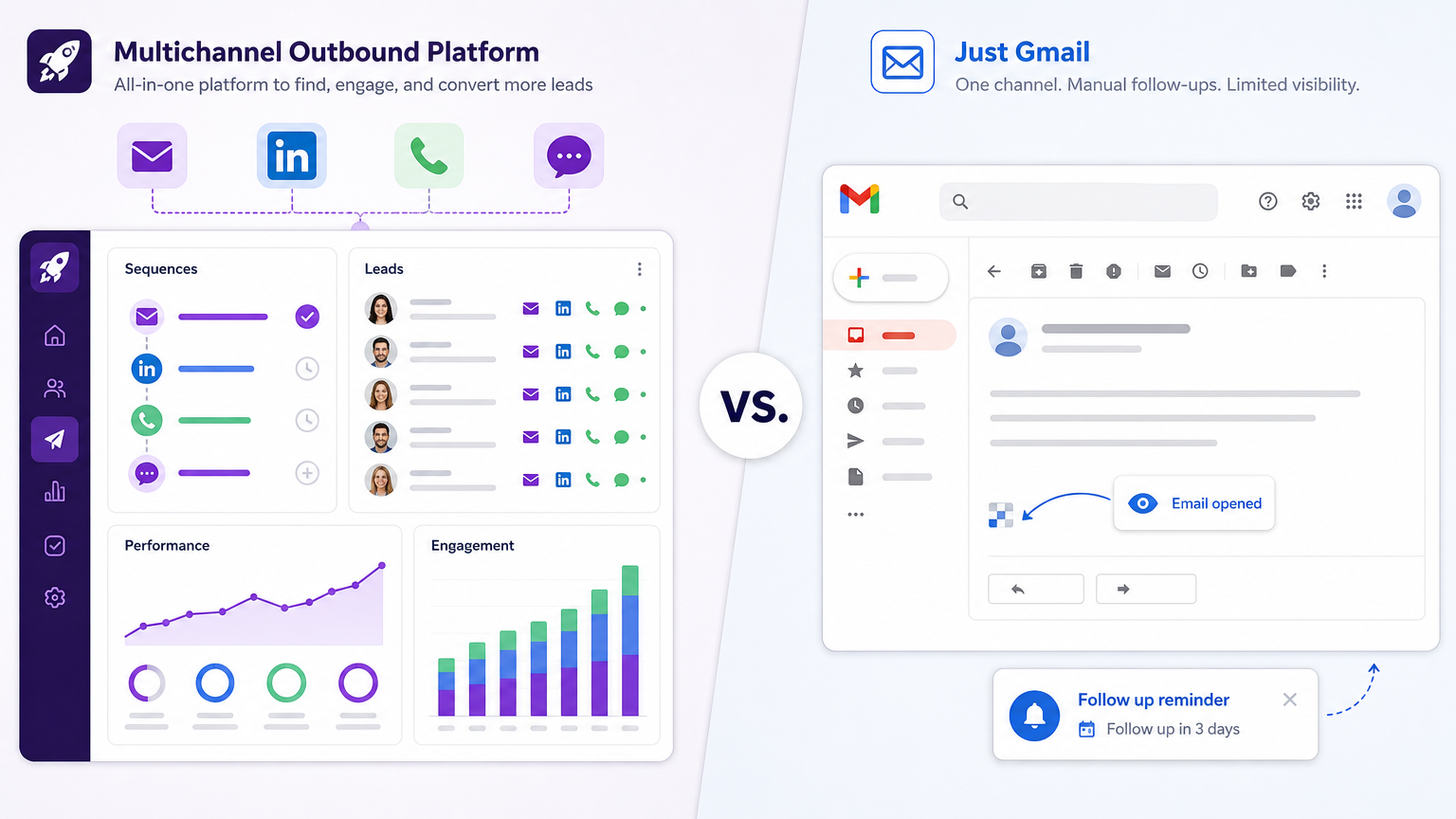
These two tools solve different problems, and the price gap between them reflects that. Vocus.io is a Gmail Chrome extension built for low-volume, personalized email from a single inbox, starting at $5 per user per month. lemlist is an AI outbound platform built for teams sending across email, LinkedIn, calls, WhatsApp, and SMS, with a 600M+ lead database and warm-up on every seat. Vocus wins on cost and simplicity for one person doing light outreach. lemlist wins on depth, deliverability, and scale for a team that needs to source leads and protect sending. The rest of this page shows exactly where each one fits, tier by tier and feature by feature.
Quick comparison table
lemlist | Vocus | |
|---|---|---|
Starting price | $69/mo (Email plan, unlimited users) | $5/user/mo (Basic) |
Best for | Sales, RevOps, and founder teams running multichannel outbound | Solo users and small teams sending low-volume email from Gmail |
Channels | Email, LinkedIn, calls, WhatsApp, SMS | Email only |
Lead database/enrichment | 600M+ database with ICP filters and enrichment | None |
Deliverability/warm-up | lemwarm warm-up and Deliverability Hub on every seat | None |
Key strength | Full outbound stack in one workflow | Cheap, simple Gmail tracking and follow-ups |
Key weakness | More platform than a solo sender needs | Gmail-only, no warm-up, single channel |
G2 rating (1–5) | 4.7/5 | 4.3/5 |
lemlist in depth
What it does
lemlist is an AI outbound platform that brings lead generation, enrichment, multichannel sequencing, and deliverability into one workflow. A team sources prospects from a built-in database, enriches them with verified contact data, personalizes messaging, runs campaigns across several channels, and manages every reply in a unified inbox without switching tools. The goal is to cover your total addressable market from one place rather than stitching together a sourcing tool, a sender, and a warm-up service.
lemlist is an AI outbound platform that brings lead generation, enrichment, multichannel sequencing, and deliverability into one workflow. A team sources prospects from a built-in database, enriches them with verified contact data, personalizes messaging, runs campaigns across several channels, and manages every reply in a unified inbox without switching tools. The goal is to cover your total addressable market from one place rather than stitching together a sourcing tool, a sender, and a warm-up service.
Top 3 features
- Lead database and enrichment: a 600M+ lead database with ICP filters, plus enrichment that pulls verified emails and phone numbers, and Intent Signal Agents that automatically add high-intent leads to campaigns when a signal fires.
- Multichannel sequences: automated steps across email, LinkedIn, calls, WhatsApp, and SMS from one workflow, with every conversation handled in a single unified inbox no matter the sender or channel.
- Deliverability tooling: lemwarm warm-up and monitoring included on every seat, plus Deliverability Hub to track mailbox and domain health when sending at scale across multiple mailboxes and domains.
Pricing
The Email plan starts at $69/mo with unlimited users and volume-based limits (50k emails per month). Multichannel is $109 per user per month and adds LinkedIn, calls, and SMS, with WhatsApp available as an add-on. Enterprise is custom. A 14-day free trial needs no card. Lead and enrichment credits are billed pay-per-use, so heavy sourcing adds to the base subscription.
The Email plan starts at $69/mo with unlimited users and volume-based limits (50k emails per month). Multichannel is $109 per user per month and adds LinkedIn, calls, and SMS, with WhatsApp available as an add-on. Enterprise is custom. A 14-day free trial needs no card. Lead and enrichment credits are billed pay-per-use, so heavy sourcing adds to the base subscription.
Best for
Sales, RevOps, and founder-led teams running multichannel outbound at scale who need sourcing, enrichment, deliverability, and reporting in one place. It also suits operators who send across many mailboxes and want warm-up and monitoring built in.
Sales, RevOps, and founder-led teams running multichannel outbound at scale who need sourcing, enrichment, deliverability, and reporting in one place. It also suits operators who send across many mailboxes and want warm-up and monitoring built in.
Biggest limitation
It is more platform than a solo sender needs, and the entry price sits well above a $5 Gmail extension. Credits for leads and enrichment add to the real monthly cost, so a single person sending a handful of emails a day will pay for capability they may not use yet. lemlist holds a 4.7/5 rating on G2 across roughly 1,396 reviews and is GDPR compliant.
It is more platform than a solo sender needs, and the entry price sits well above a $5 Gmail extension. Credits for leads and enrichment add to the real monthly cost, so a single person sending a handful of emails a day will pay for capability they may not use yet. lemlist holds a 4.7/5 rating on G2 across roughly 1,396 reviews and is GDPR compliant.
Vocus in depth
What it does
Vocus.io is a Chrome extension that adds email tracking, mail merge, and automated follow-ups inside Gmail. It runs in the inbox reps already use, with no separate app to open and nothing new to learn. That design makes it fast to adopt for one person who wants to see opens and clicks and chase non-replies without leaving Gmail. Everything happens in the compose window and thread view, so the learning curve is close to zero for anyone who already lives in Gmail all day.
Vocus.io is a Chrome extension that adds email tracking, mail merge, and automated follow-ups inside Gmail. It runs in the inbox reps already use, with no separate app to open and nothing new to learn. That design makes it fast to adopt for one person who wants to see opens and clicks and chase non-replies without leaving Gmail. Everything happens in the compose window and thread view, so the learning curve is close to zero for anyone who already lives in Gmail all day.
Top 3 features
- Real-time tracking: unlimited open and click tracking on the emails you send from Gmail, shown in real time.
- Templates and mail merge: reusable snippets and personalized mass emails composed and sent directly from Gmail.
- Automated follow-ups: sequences that trigger when a prospect does not reply, with CRM auto-BCC to Salesforce and Pipedrive and send-later scheduling.
Pricing
Per the Vocus pricing page, plans are billed per user per month: Basic $5, Starter $10, Professional $20, and Growth $80 (contact sales). A 30-day free trial needs no card. Snippet allowances climb across tiers (50/100/200/800), and follow-up limits do the same (50 on Basic, 100 on Starter, 500 on Professional, with Growth set on request), where each automated follow-up counts against the monthly cap. Connected inboxes are capped at 5 on lower tiers and 10 on higher ones. Professional adds attachments in campaigns and branded tracking URLs, and Growth adds external SMTP.
Per the Vocus pricing page, plans are billed per user per month: Basic $5, Starter $10, Professional $20, and Growth $80 (contact sales). A 30-day free trial needs no card. Snippet allowances climb across tiers (50/100/200/800), and follow-up limits do the same (50 on Basic, 100 on Starter, 500 on Professional, with Growth set on request), where each automated follow-up counts against the monthly cap. Connected inboxes are capped at 5 on lower tiers and 10 on higher ones. Professional adds attachments in campaigns and branded tracking URLs, and Growth adds external SMTP.
Best for
Solo users, freelancers, and small teams doing low-volume outreach from Gmail (roughly 20–50 emails a day) who want a very cheap entry point and do not need lead sourcing or warm-up.
Solo users, freelancers, and small teams doing low-volume outreach from Gmail (roughly 20–50 emails a day) who want a very cheap entry point and do not need lead sourcing or warm-up.
Biggest limitation
Vocus is Gmail-only, with no Outlook support, no inbox warm-up, and no inbox rotation for multi-account sending. Per-user pricing scales linearly, so five users on Professional is $100 per month. Follow-up caps burn fast once volume rises, the interface is dated, and there is no lead database. It covers email and nothing else. According to its G2 profile, Vocus holds a 4.3/5 rating from a small review base, most of it from small-business users.
Vocus is Gmail-only, with no Outlook support, no inbox warm-up, and no inbox rotation for multi-account sending. Per-user pricing scales linearly, so five users on Professional is $100 per month. Follow-up caps burn fast once volume rises, the interface is dated, and there is no lead database. It covers email and nothing else. According to its G2 profile, Vocus holds a 4.3/5 rating from a small review base, most of it from small-business users.
Head-to-head: lemlist vs Vocus
Pricing and value
Winner: Vocus. At $5 per user per month for open tracking and automated follow-ups inside Gmail, Vocus is the cheapest way for one person to start, while lemlist’s Email plan begins at $69 per month.
Feature depth
Winner: lemlist. lemlist adds a 600M+ lead database, enrichment, Intent Signal Agents, and multichannel sequencing that Vocus does not offer at any tier.
Deliverability at scale
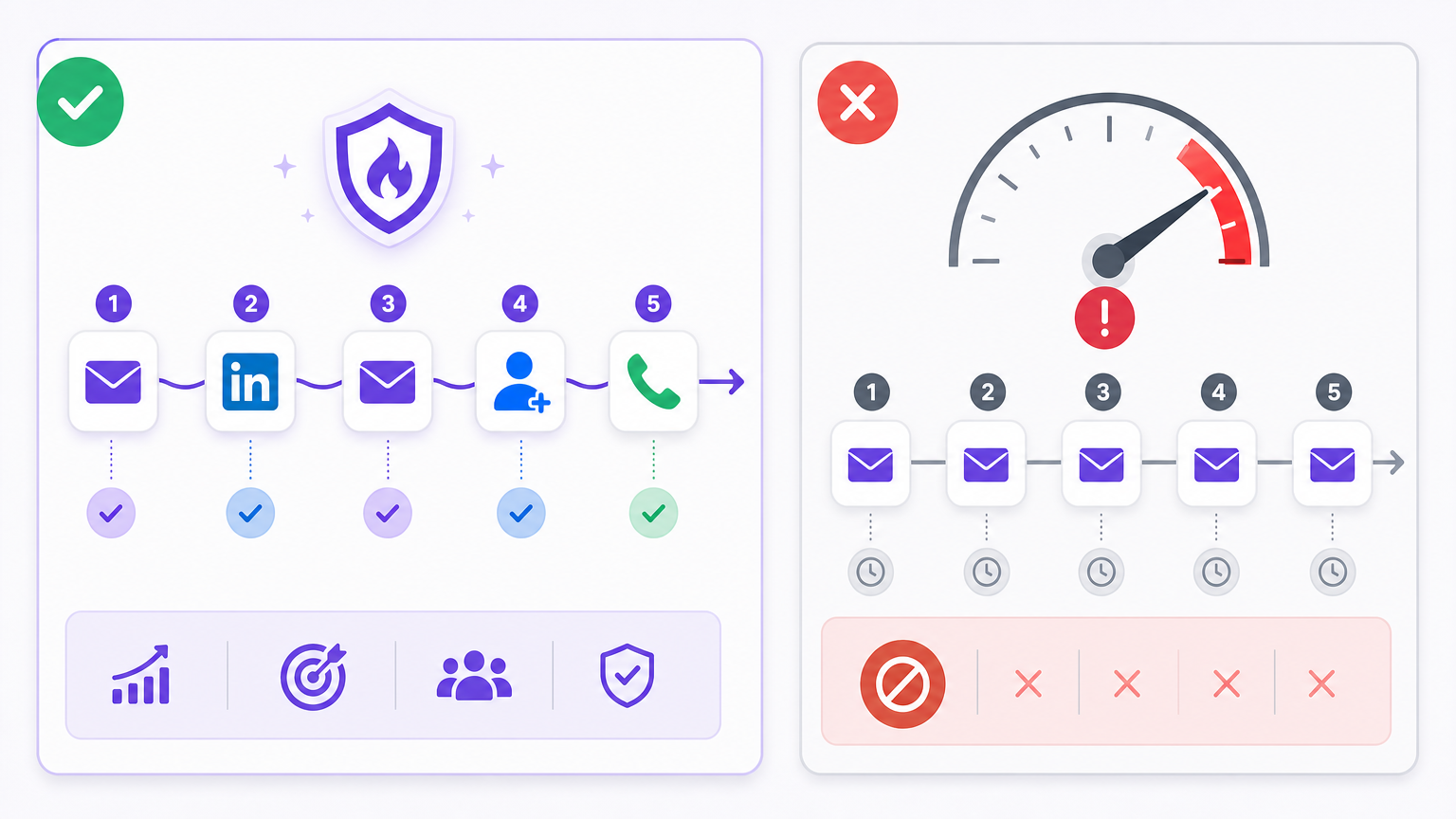
Winner: lemlist. Every lemlist seat includes lemwarm warm-up and Deliverability Hub monitoring, while Vocus has no warm-up and no inbox rotation to protect sending across multiple mailboxes.
Ease of getting started in Gmail
Winner: Vocus. Vocus installs as a Chrome extension and runs inside the Gmail inbox reps already use, so there is nothing new to learn on day one.
Scalability
Winner: lemlist. The lemlist Email plan supports unlimited users and multichannel outreach, while Vocus charges per user and caps automated follow-ups every month.
Final verdict
Choose lemlist if you run outbound as a team, send across more than one channel, and need lead sourcing, enrichment, and deliverability that hold up at volume. Choose Vocus if you are a solo user or tiny team sending a low volume of personalized email from Gmail and you want the tightest possible budget.
The deciding factor is where you are headed. If you expect your sending to grow or plan to add channels, lemlist’s warm-up and unlimited-user Email plan remove the ceilings Vocus hits early, and the built-in database means you are not paying separately to find leads. If your outreach stays small and lives entirely in Gmail, paying platform prices buys capacity you will not touch, and Vocus covers tracking and follow-ups for the price of a coffee. Match the tool to the volume and the number of channels you actually run, not the one you hope to run someday. Ready to try lemlist? Start for free.
Frequently asked questions
Is Vocus cheaper than lemlist?
Yes. Vocus starts at $5 per user per month against lemlist’s $69 per month Email plan. For a single low-volume sender, Vocus costs less. lemlist’s unlimited-user pricing narrows the gap once a team grows past a few seats.
Does Vocus have inbox warm-up like lemlist?
No. Vocus has no warm-up feature. lemlist includes lemwarm warm-up on every seat, plus Deliverability Hub monitoring built for sending at scale.
Can Vocus send multichannel (LinkedIn, calls) like lemlist?
No. Vocus is email-only and works inside Gmail. lemlist runs email, LinkedIn, calls, WhatsApp, and SMS from one workflow with a unified inbox.
Does lemlist work inside Gmail?
lemlist is a standalone platform rather than a Gmail extension, and it connects to your mailboxes and to CRMs like HubSpot and Salesforce. Vocus is the tool that lives directly inside the Gmail interface.
Which is better for cold email at scale?
lemlist. Its warm-up, Deliverability Hub, multi-mailbox support, and unlimited-user Email plan are built for volume. Vocus caps follow-ups every month and offers no warm-up, which limits scaled cold email.