September 29, 2026 | 7 min read
How Lative's BD team spends the day calling while lemlist does the rest
Testimonial
Lative's BD team books 30% more meetings than its target, while lemlist handles every email and LinkedIn message.
Lative
+30%meetings booked
4tools replaced by one platform
97%email deliverability
Ready to launch?
Convert strategy into pipeline
Launch your first outbound campaign with verified leads, AI sequences, and multichannel outreach from one platform.
Lative is growing fast. The Dublin-based GTM planning platform grew ten times in 15 months, and it now works with some of the biggest names in SaaS. Its BD team covers four regions, from Australia to the US. They use lemlist to send their emails and LinkedIn messages automatically and to see which leads are the warmest. That leaves them free to do the thing that books most of their meetings: calling.
Building outbound from scratch, in a brand new category
Neil Campbell was Lative's first sales hire. He worked with the founders to set up how Lative sells: the messaging, the ICP, and who to target first. RevOps? CROs? Sales leaders? FP&A?
Today he leads business development and supports two account executives, one in Europe and one in the US. He sells globally, from Australia to the US.
Lative is a relatively complex sales planning tool, and on cold calls people didn't always get it right away. Some thought it was forecasting software. Others thought it was compensation software. Explaining the difference took time.

We do a lot of dinners, webinars and events. On a cold call, when you have to explain what Lative is, you can lose momentum. People get confused and think we're forecasting software or compensation software. It's just easier when they already have some idea of Lative and a story behind it.
-Neil Campbell, Head of BD @Lative
That's why Lative runs so many events. Prospects hear about Lative before Neil ever calls them. But more events also mean more campaigns to keep track of.
Why Lative moved away from Salesloft
Before lemlist, the team used Salesloft, with ZoomInfo, Lusha and Apollo for contact data. Some things didn't work well:
❌ The UI felt old, and tracking wasn't great.
❌ Every LinkedIn message meant leaving Salesloft to copy and paste it by hand.
❌ Data tools returned office numbers, and nobody answers the office phone anymore.
❌ Email deliverability dropped to 60% once the whole team started sending.
The team was growing and every rep needed leads. This setup wasn't going to keep up.
Neil was the first person at Lative to use lemlist. Soon, the account executives were using it too.
I realized very quickly that, especially for a startup, lemlist was such a game changer compared to what I've used before. especially the UI. I really like it. It's very modern, intuitive and easy to use.
Events create the story. Lead scoring decides who to call.
Each dinner, webinar and event has its own campaign in lemlist. With lead scoring, Neil can see who is most engaged. He can look at the whole database or at one campaign.
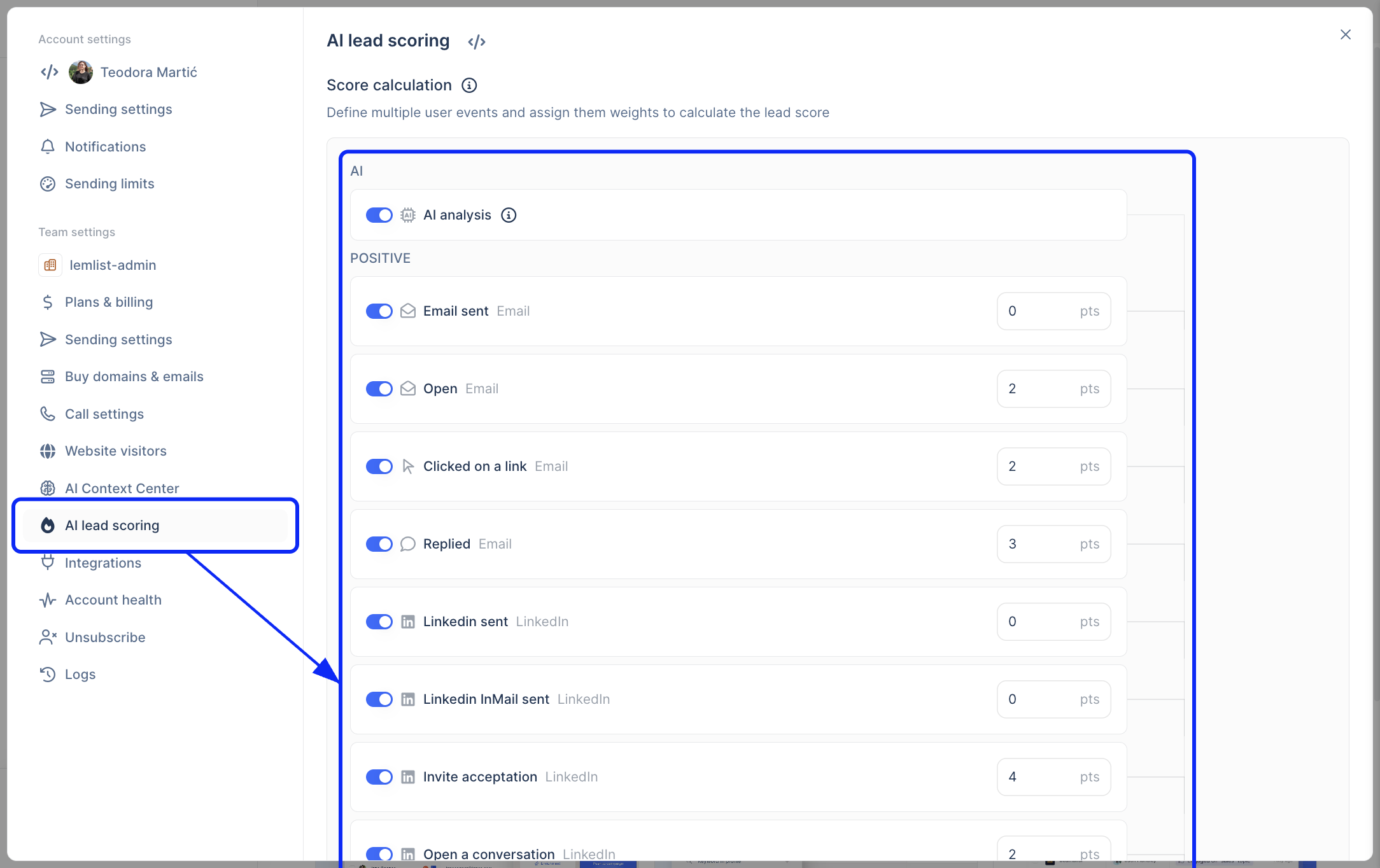 So instead of going through a long list of event contacts, he starts with the people who already know Lative and are showing interest. Those are his first calls of the day.
With lemlist, I can work from the hottest leads in the whole database, or from the specific campaigns I want to concentrate on. Who are the hottest leads from this campaign that I can go after?
In Business Development, time is the one thing you can't get more of.
In business development, every minute you're working, you have to make count. You're putting your time where you'll get the most ROI and the best results. It's helped boost efficiency so much, for me and for the other account executives.
A workday with zero manual messages
Most of Neil's meetings come from calls. LinkedIn also works better than he expected, because the people he sells to (sales leaders and RevOps) spend a lot of time there.
He still sends emails. He doesn't expect them to book meetings, but they keep his name in front of prospects. When he calls, people have seen his name before.
So he automated everything that isn't a call:
✅ LinkedIn connection requests, plus a message as soon as someone accepts
✅ 6 to 8 emails in most sequences, so prospects keep seeing his name
✅ More time for calls with the warmest leads
I like to have my day set up where I don't have to write any emails or do any LinkedIn touches. All I have to do is call. I see who is surfacing as the warmest leads, build a bit of a case around those, and call them. Instead of wasting my time writing manual messages, because we all know 80 to 90% of the manual messages you write are never even looked at.
One of his first campaigns got a 37% reply rate and a 71% LinkedIn invite acceptance rate.
The right number, in the right time zone
Calls only work if you have the right number. lemlist's waterfall enrichment searches 25+ data providers to find mobile numbers, not office lines.
With a lot of other providers, you'd be getting a lot of office numbers. Nobody works in the office anymore, and if you do get through to the office, nobody transfers you anymore. You have to get mobile numbers to get anywhere.
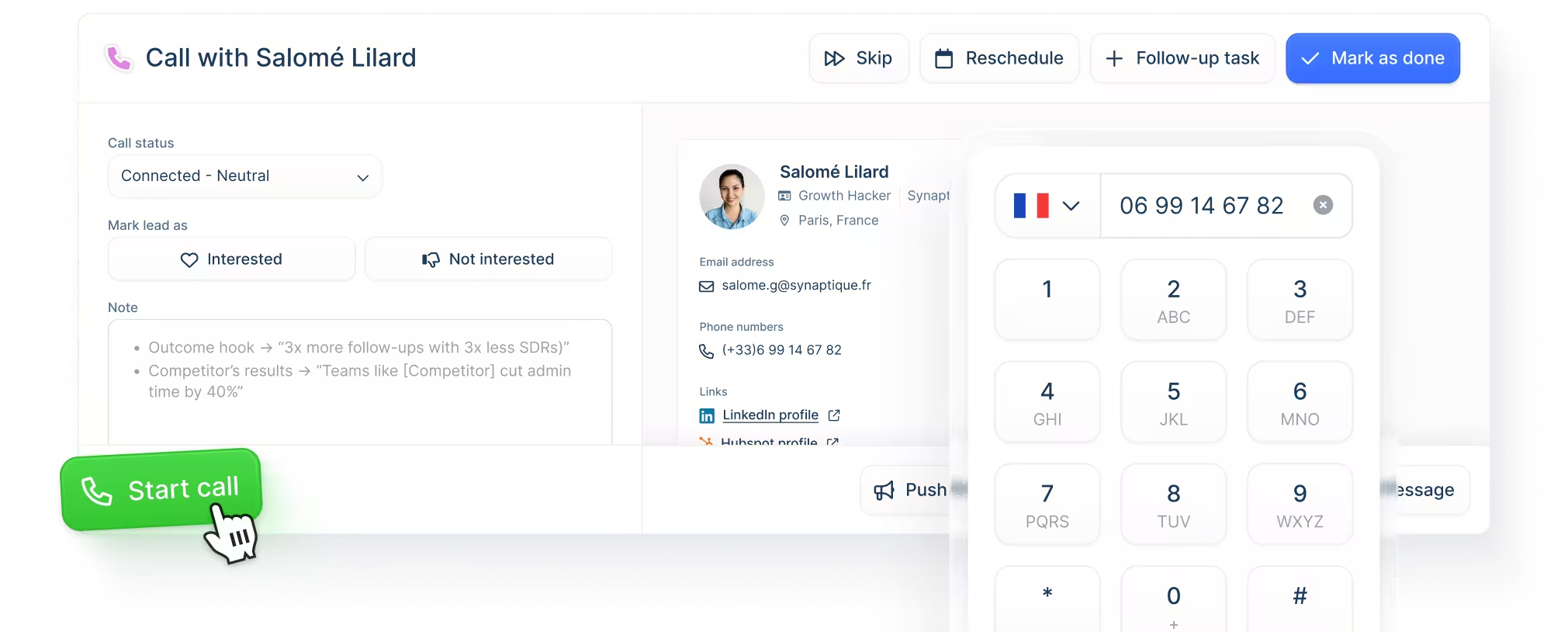
Time zones are the other problem. Neil calls people in the US, Europe, Asia and Australia. lemlist gets each contact's location from LinkedIn, so he can filter his list by time zone, choose morning or afternoon, and call from there. He doesn't wake anyone up in San Francisco at 6 a.m. anymore.
I cover the US, Europe, Asia and Australia, and all of these people have to be called at specific times. With lemlist, there's a function for people in each time zone, and even within that time zone, I can choose if I want to call them in the morning or the afternoon. It's all there, and I can call directly from that list.
Deliverability back on track
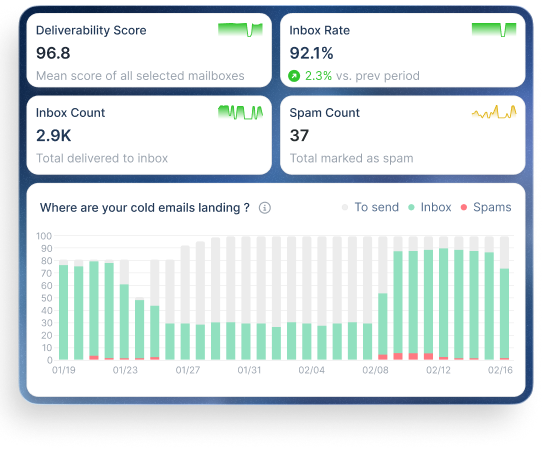
When the account executives joined, the team started sending a lot more emails, and deliverability dropped to under 60%. lemlist protects the domain by leaving a few minutes between emails, so a mailbox never sends a big batch at once, while lemwarm builds the domain's reputation by exchanging emails with real inboxes in the background. Today, deliverability is at 97%.
We really struggled with deliverability at the start. lemlist fixed that issue for us, and we're able to keep an eye on it the whole time. It's literally just one click into lemwarm. We see where our email health is and whether we need to scale our outreach down or up.
The results: one BD lead, two AEs, four regions
- 13 qualified meetings booked per month, against a target of 10
- 79 opportunities created since switching to lemlist
- 10+ hours saved per week on manual emails and LinkedIn messages
- 4 regions (US, Europe, Asia and Australia) covered from one list
My first sales tech stack was Outlook and Excel. Then I used Salesloft, and I've seen Gong. But I would just prefer lemlist over any of them. It's the best thing I've used. It comes down to ease of use, how easy it is to spin up campaigns, and the data you get back from it.
From first event to closed deal
Here's how Lative's outbound works, step by step:
→ Events and webinars introduce people to Lative
→ lemlist follows up by email and LinkedIn automatically
→ Lead scoring shows who is warmest, in the whole database or in one campaign
→ Enrichment and time zone filters help Neil reach the right person at a good time
→ lemwarm keeps emails out of spam
→ Every week, lemAgent finds interested leads that Neil might have missed
It's really streamlined everything and made me get the most out of my time working. I've really never come across anything as easy as lemlist for outbound.
Curious to see what your team can achieve?
Try lemlist to automate your emails and LinkedIn steps, find your warmest leads, and give your reps more time to sell.
Lative is an AI-native GTM Planning and Decision Intelligence platform that connects marketing intelligence to sales execution transforming how revenue teams plan, operate and grow in the most efficient and profitable way.
WEBSITE
HEADQUARTERS
Dublin, Ireland
INDUSTRY
Sales Planning Software
SIZE
11-50 employees
FOUNDED
2022
