July 29, 2026 | 7 min read
Ready to launch?
Convert strategy into pipeline
Launch your first outbound campaign with verified leads, AI sequences, and multichannel outreach from one platform.
lemlist vs Supersend
lemlist vs Supersend: which is better? (2026)
Updated July 2026. This lemlist vs Supersend comparison is for sales reps, sales leaders, RevOps teams, and founders weighing two cold outreach tools, so here’s the answer up front.
Choose lemlist if you want an all-in-one outbound platform that finds leads, enriches them, runs multichannel campaigns, and protects deliverability under transparent self-serve pricing. Choose Supersend if your single biggest problem is email deliverability at very high volume and you want dedicated sending infrastructure managed for you.
lemlist covers the whole outbound motion: lead data, enrichment, multichannel sequencing, and a unified inbox across email, LinkedIn, calls, WhatsApp, and SMS. Supersend focuses on the sending layer, provisioning servers and IPs so high-volume senders land in the inbox. The rest of this page breaks down pricing, channels, deliverability, and lead data so you can match each tool to how your team actually sends.
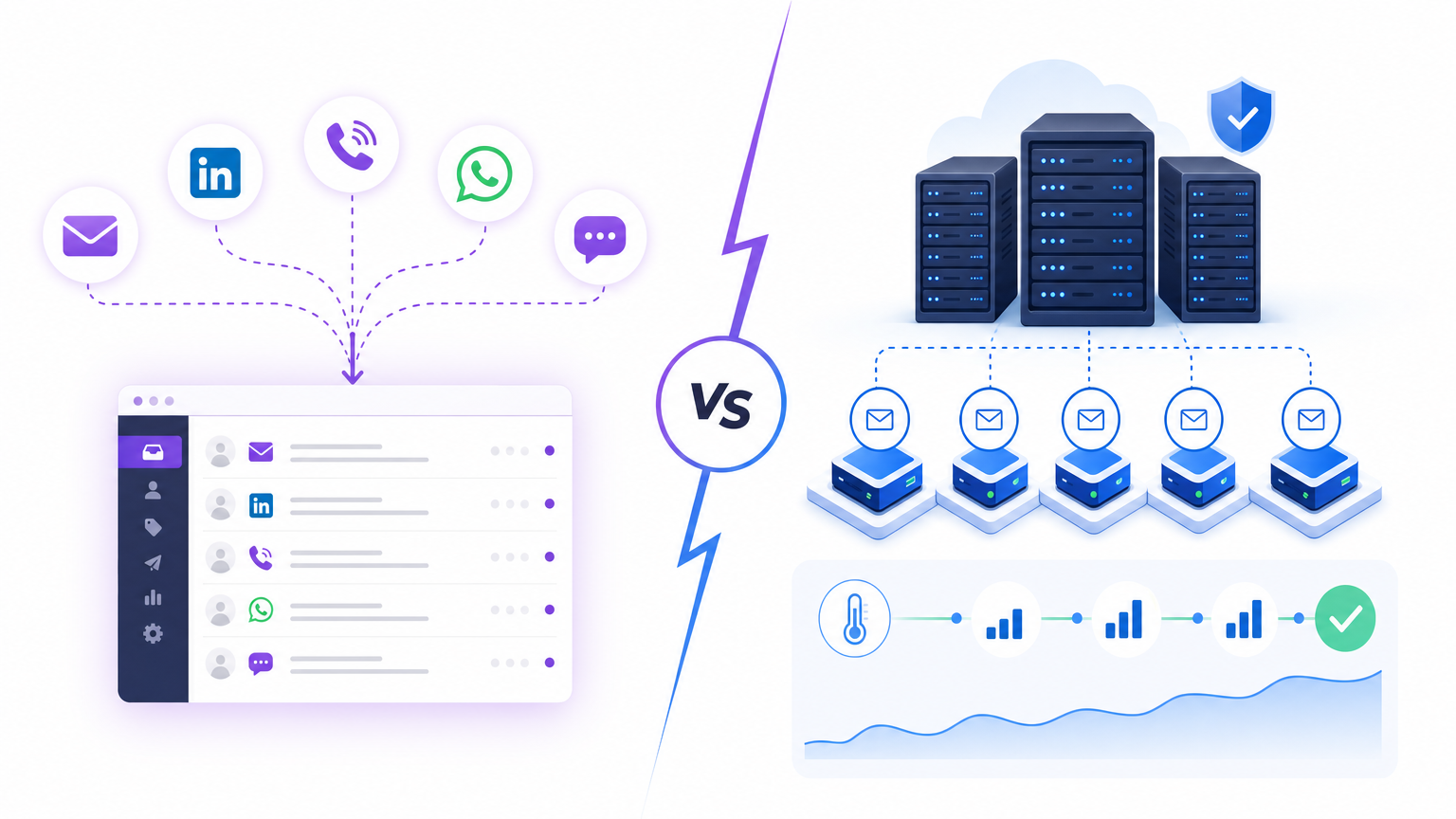
lemlist vs Supersend at a glance
lemlist | Supersend | |
|---|---|---|
Starting price | $69/mo (Email, 50k sends) | ~$99/mo legacy Growth; mostly custom, sales-scoped |
Pricing model | Transparent, self-serve (volume for Email; per-user for Multichannel) | Flat platform fee + per-send rate, quoted on a sales call |
Channels | Email, LinkedIn, calls, WhatsApp, SMS | Email (Twitter removed; LinkedIn gone for new orgs) |
Lead database | 650M+ leads | Limited in-app lead finding |
Deliverability | Deliverability Hub + lemwarm warm-up | Managed dedicated servers/IPs, sender rotation, placement testing |
Key strength | All-in-one lead gen + multichannel outreach | Managed deliverability infrastructure at high volume |
Key weakness | Per-user cost on Multichannel | Opaque pricing, email-centric, tiny review base |
Best for | Teams wanting the full outbound motion in one tool | High-volume senders focused on deliverability |
G2 rating | 4.6/5 (~1,818) | 4.6/5 (~18) |
The two tools solve different problems. lemlist wins if you want lead data, multichannel outreach, and deliverability tools in one self-serve platform with pricing you can read on the lemlist pricing page before you buy. Supersend wins if you already have leads and copy, you send email at very high volume, and inbox placement is the one metric you care about most.
The tables below and the breakdowns that follow show where each tool earns its keep. lemlist spreads across the full pipeline, while Supersend goes deep on one layer. Your choice comes down to whether you need range or depth.
lemlist
What it does
lemlist is an AI outbound platform that runs your full motion in one place. You find leads, enrich them, launch multichannel sequences, and protect deliverability without stitching together separate tools. Intent Signal Agents track high-intent events and add matching leads to campaigns automatically, and lemAgent helps you build those campaigns with AI.
Top 3 features
- 650M+ contacts in the b2b lead database, with waterfall enrichment for verified emails and phone numbers.
- Multichannel sequences across email, LinkedIn, calls, WhatsApp, and SMS from one workflow, with every reply landing in a unified inbox.
- A Deliverability Hub plus lemwarm, the built-in warm-up that keeps mailboxes healthy as you scale across domains.
Pricing
The Email plan starts at $69/mo for 50,000 sends with unlimited users, and volume tiers scale to $89, $159, $359, and $659 as monthly send limits rise. Multichannel is $109/user/mo and adds LinkedIn, calling, SMS, and a WhatsApp add-on with 400 free credits per user each month. Enterprise is custom, with SSO/SAML and a dedicated CSM. Every tier is self-serve with a 14-day free trial and no credit card.
Best for
Teams that want the entire outbound motion, lead generation through multichannel outreach and deliverability, in one self-serve platform. lemlist connects with HubSpot and Salesforce and offers 500+ integrations plus MCP and API access, so it fits the stack you already run. It holds a 4.6/5 rating from roughly 1,818 G2 reviews.
Biggest limitation
Multichannel pricing is per user, so cost scales with headcount rather than with sending volume. There is also no white-label option, which matters for agencies that resell under their own brand.
Supersend
What it does
Supersend is deliverability-first, managed cold email infrastructure. It provisions and operates dedicated servers, IPs, and sender identities for you, so you run campaigns while Supersend runs the sending layer.
Top 3 features
- Dedicated sending infrastructure with sender rotation and adaptive pacing, built to protect placement at high volume.
- Warm-up through a managed mailbox network, plus placement testing on real senders and AI bounce analysis.
- A unified reply inbox with AI reply labels, alongside sequencing, CRM sync, and A/B testing. Supersend claims a 94% inbox rate.
Pricing
Supersend is sales-led. Its pricing page shows no self-serve prices and describes a flat platform fee plus a per-send rate based on your volume, scoped on the first call. G2 lists a legacy Growth tier starting at $99/mo for 50,000 email sends, and reviewers reference a 14-day free trial. There is no public self-serve checkout.
Best for
High-volume senders and agencies whose main problem is email deliverability at scale and who want the infrastructure managed for them. It integrates with HubSpot, Slack, Pipedrive, Zapier, Make, and Clay. Supersend holds a 4.6/5 rating on G2, though from roughly 18 reviews, so you can read the full set on its G2 review page.
Biggest limitation
Pricing is opaque and sales-scoped, so you cannot self-serve or compare quotes without a call. The channel mix has also narrowed: per the Supersend changelog, Twitter/X was removed on 1 June 2026 and LinkedIn was sunset for new organizations created on or after 26 June 2026. New signups are effectively email-only, and the public review base is small.
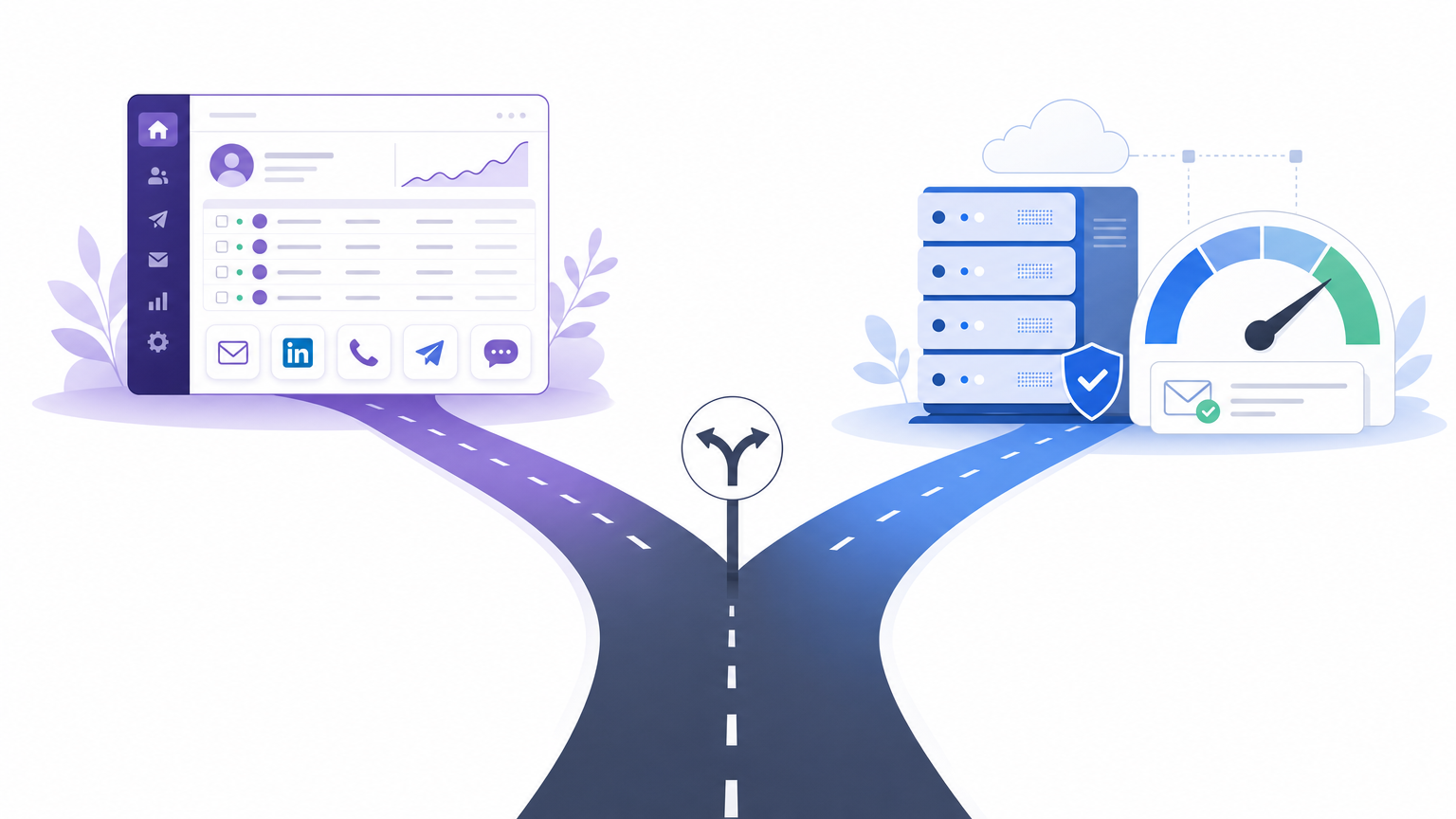
Head-to-head: five criteria, five winners
Pricing and value: lemlist. lemlist publishes self-serve pricing from $69/mo, while Supersend quotes a flat fee plus per-send rate only on a sales call.
Channel coverage: lemlist. lemlist runs email, LinkedIn, calls, WhatsApp, and SMS from one workflow, while Supersend is email-centric after removing Twitter and sunsetting LinkedIn for new orgs.
Deliverability at scale: Supersend. Supersend’s dedicated managed infrastructure and sender rotation are purpose-built for very high sending volume, and that focus is its genuine strength.
Lead generation and data: lemlist. lemlist ships a 650M+ contact database with waterfall enrichment, while Supersend offers only limited in-app lead finding.
Ease of getting started: lemlist. lemlist gives you a self-serve 14-day trial with no credit card, while Supersend requires a sales call before you can start.
Final verdict
Choose lemlist if you want lead data, enrichment, multichannel outreach, and email deliverability tools in one self-serve platform with predictable pricing. It fits teams that want to find, reach, and convert prospects without buying a separate tool for each step.
Choose Supersend if you send very high email volume, your top priority is inbox placement, and you want dedicated sending infrastructure managed for you. Its deliverability engineering is real, and for high-volume email specialists that focus can be worth the sales-led setup. If you already own your leads and your sequences, handing the sending layer to Supersend lets your team stop babysitting mailbox health.
For most sales, RevOps, and founder-led teams that need the full outbound motion, lemlist is the more complete and more transparent choice. You can try every plan yourself, including lemwarm warm-up, before you commit.
Frequently asked questions
Is lemlist or Supersend better for cold email?
For most teams, lemlist is the better cold email choice because it pairs sending with lead data, multichannel outreach, and deliverability tools in one platform. Supersend is better if your only job is sending high-volume email through managed, dedicated infrastructure.
How much do lemlist and Supersend cost?
lemlist starts at $69/mo for the Email plan (50,000 sends), with Multichannel at $109/user/mo and custom Enterprise pricing, all self-serve. Supersend does not publish self-serve prices; it charges a flat platform fee plus a per-send rate scoped on a sales call, with a legacy Growth tier listed at around $99/mo.
Does Supersend support LinkedIn and multichannel outreach?
Not for new accounts. Supersend removed Twitter/X on 1 June 2026 and sunset LinkedIn for organizations created on or after 26 June 2026, so new signups are email-focused. lemlist runs email, LinkedIn, calls, WhatsApp, and SMS from one workflow.
Which tool has a bigger lead database?
lemlist, by a wide margin. It gives you 650M+ leads and companies with waterfall enrichment. Supersend offers only limited in-app lead finding and no comparable prospect database.
Which tool is better for deliverability at high volume?
Supersend has the edge for pure high-volume email, because it provisions dedicated servers and IPs and rotates senders for you. lemlist protects deliverability with its Deliverability Hub and lemwarm warm-up, which cover most teams sending across multiple mailboxes and domains.